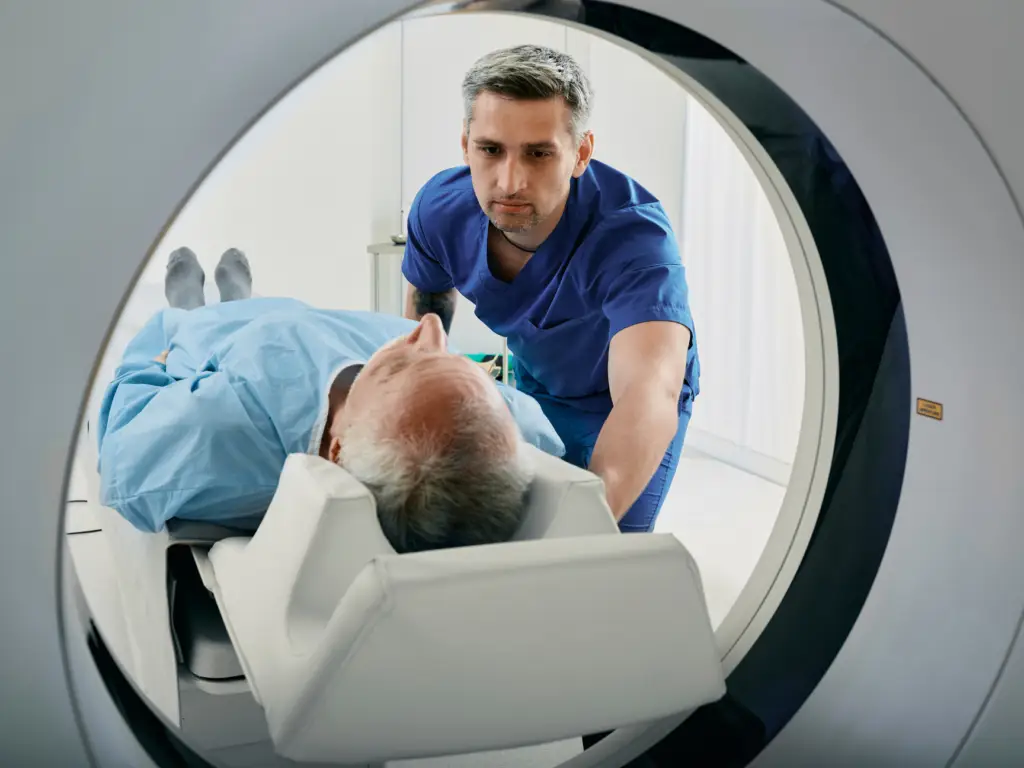
If you have spent a few years working as an MRI technologist, you may reach a point where you start wondering what else you could do with your experience. Maybe you want to work in a different type of facility, see how another imaging department operates, earn money while exploring a new part of the country, or simply change your routine without leaving the specialty you have worked hard to build.
Travel MRI can offer that opportunity.
Like other travel healthcare roles, though, becoming a travel MRI tech means stepping into facilities that need someone who can adapt quickly. You are bringing your MRI experience with you, but you will still need to learn new equipment, workflows, protocols, teams, and patient populations each time you begin an assignment.
Travel MRI Tech Jobs: What to Consider
Before you start searching for your first travel MRI tech job, it helps to understand what facilities may expect, what can change from one assignment to another, and what you should ask before accepting a contract.
What Does a Travel MRI Tech Do?
The core responsibilities of an MRI technologist do not change simply because you are traveling. Travel MRI techs perform magnetic resonance imaging exams, prepare and position patients, follow safety procedures, work with imaging equipment, and collaborate with radiologists and other members of the healthcare team.
What changes is where you do that work.
Travel MRI techs take temporary assignments at healthcare facilities that need additional imaging support. Depending on the opportunity, that could mean working at a large hospital, smaller community facility, outpatient imaging center, or another setting that provides MRI services.
Assignments are temporary, often lasting several weeks or months, which means travelers regularly transition between facilities. That variety can be one of the most appealing parts of traveling, but it also requires confidence in your skills and a willingness to learn how each new department operates.
Experience Matters When You Want to Travel
Travel assignments generally are not designed to teach someone how to become an MRI technologist.
Facilities bringing in travelers often need professionals who can become productive relatively quickly. Orientation may cover the facility, department, systems, policies, and equipment, but travelers are typically expected to arrive with a strong foundation in their specialty.
That is why gaining solid MRI experience before traveling is important.
There is no single amount of experience that guarantees you are ready for every assignment. Requirements can vary by facility and position, and some opportunities may require experience with specific patient populations, equipment, procedures, or settings.
Instead of looking only at the number of years you have worked, think about the depth of your experience. How independently do you work now? How comfortable are you handling different types of exams? How well do you respond when the schedule changes or something unexpected happens?
Traveling becomes much easier when you are confident in the work itself.
Certifications and Requirements Can Vary
MRI technologists may hold credentials through organizations such as the American Registry of Radiologic Technologists (ARRT) or the American Registry of Magnetic Resonance Imaging Technologists (ARMRIT), depending on their education and career path. Individual jobs may have specific certification, education, experience, or life-support requirements.
State requirements can also vary.
Before considering an assignment, make sure you understand what credentials are required for that particular position and whether there are any state-specific requirements you need to complete before your start date.
Your recruiter and credentialing team can help you understand the requirements attached to an opportunity, but keeping your own records organized can make the process much smoother. Maintaining current certifications and having easy access to documentation can save time when an assignment moves quickly.
Every MRI Department Will Be a Little Different
One of the biggest adjustments for a new traveler is realizing how much can change between facilities.
You may be comfortable with the equipment and workflow at your current job because you use them every day. At your next facility, you could encounter a different scanner manufacturer, software interface, documentation process, department layout, or set of protocols.
Even familiar exams may be handled somewhat differently.
That does not mean you need experience with every MRI system before you can travel. It does mean you should be comfortable learning new systems and asking questions when you need clarification.
Before accepting an assignment, ask what equipment the department uses and whether the facility expects previous experience with that specific system. If the position requires skills or experience you do not have, it is better to know before you arrive.
MRI Safety Remains a Major Responsibility
MRI safety is always important, but traveling adds another layer because you are entering an unfamiliar environment.
You already understand the importance of screening patients, implants, devices, equipment, and anyone entering the MRI environment. What you will need to learn at each facility is how that organization handles its specific safety processes.
Where are the MRI zones located? How does the department document screening? Who is responsible for different parts of the process? What procedures are followed when there is a questionable implant or device?
You should never assume that a process will work exactly the way it did at your previous facility.
Your clinical knowledge travels with you. The facility’s workflow does not.
Learning how the new department manages MRI safety should be one of your priorities during orientation.
Ask About the Patient Population
Two MRI jobs can look very different depending on the patients the facility serves.
One department may primarily handle routine outpatient imaging. Another may see emergency, inpatient, oncology, neurological, pediatric, or higher-acuity cases. Some positions may involve more patients who need additional support because of pain, mobility limitations, anxiety, or other concerns.
Understanding the patient population can help you determine whether your experience matches the assignment.
Ask what types of exams are most common and what the typical workload looks like. If the facility serves a patient population you have limited experience with, find out what level of familiarity they expect from a traveler.
The goal is not to find an assignment identical to your current job.
Part of traveling is gaining exposure to different environments.
You simply want the difference to be one you are prepared to handle.
Find Out Whether Contrast Is Part of the Role
Do not assume every facility divides responsibilities the same way.
Ask whether you will be expected to administer contrast, start IVs, access lines when permitted, or perform other related responsibilities. Find out what the facility requires and what policies govern those tasks.
If contrast administration is a significant part of the position, make sure you understand the expectations before accepting.
These details may seem small when you are looking at the overall opportunity, but they can have a major impact on what your daily work actually looks like.
Ask About the Schedule Before You Accept
A job listing may tell you whether the position is days, evenings, or nights, but you will probably want more information than that.
Ask whether the schedule is fixed or rotating and whether weekends, holidays, call, or overtime are expected. Find out whether shifts are eight, 10, or 12 hours and how consistently the department follows that schedule.
Call can be particularly important to clarify.
If call is part of the assignment, ask how frequently you will take it, what response time is required, and how often technologists are typically called in. You should also understand how call and call-back compensation are handled within the assignment.
If schedule is one of the reasons you are considering a particular opportunity, make sure the reality matches what you have in mind.
Understand Whether You’ll Work Independently
Some MRI departments have multiple technologists working at the same time. Others may have periods when one technologist is handling much of the workload independently.
Ask about typical staffing.
How many MRI technologists are normally working during your shift? Who is available if you have a question? Is there additional imaging staff nearby? What does coverage look like on nights or weekends?
Experienced travelers are expected to be independent, but independence should not mean arriving without any understanding of the support structure.
Knowing what the department looks like during your actual shift can help you decide whether the position fits your experience and comfort level.
Orientation May Be Shorter Than You’re Used To
One of the biggest adjustments for first-time healthcare travelers is the pace of orientation.
A permanent employee may receive a longer onboarding period because the facility expects that person to remain with the organization. Travelers are brought in to fill a temporary need, so facilities may expect them to begin working more independently after a shorter orientation.
That is another reason experience matters.
During orientation, focus on what is specific to the facility. Learn the department layout, equipment, protocols, documentation system, safety processes, emergency procedures, and where to find help.
Take notes if you need to.
Nobody expects you to memorize an entire hospital on your first day, but you should use the orientation time to learn the things that will help you work safely and confidently once you are on your own.
Your First Assignment Does Not Need to Be the Biggest Leap Possible
There can be a temptation to make your first travel assignment a complete adventure.
New state. Huge city. Completely different facility. Different scanner. Different shift. Thousands of miles from home.
You can do that, but you do not have to.
For your first assignment, there is nothing wrong with choosing an opportunity that gives you some familiarity while you learn how traveling works. You might choose a facility similar to the one where you currently work or take an assignment within driving distance of home.
Traveling itself introduces plenty of new variables. You are learning a facility while also managing temporary housing, credentialing, a new community, and the logistics of living away from home.
You can always get more adventurous once you know what kind of traveler you are.
Housing Should Be Part of Your Decision
An assignment is not financially attractive simply because the compensation looks good.
You also need somewhere to live.
Before accepting a travel MRI assignment, research short-term housing in the area and look at realistic prices for the dates you would be there. Pay attention to how far affordable housing is from the facility and what the commute would look like during your scheduled shift.
A high-paying assignment in an expensive housing market may leave you with less money than you expected. Another opportunity with lower compensation may work better financially if housing and transportation costs are significantly lower.
Look at the entire picture before deciding.
The best assignment is not always the one with the largest number at the top of the offer.
Think About What You Want From Travel MRI
There are plenty of reasons an MRI technologist might decide to travel, and knowing yours can help you choose better assignments.
Maybe you want to see different parts of the country. Perhaps you want exposure to different facilities and imaging environments. You may want more control over when and where you work, or you may simply be ready for a change after spending years in the same department.
Your reason can also change over time.
Your first few assignments may be about exploring new destinations. Later, you may prioritize being closer to family, working a particular schedule, or gaining experience at certain types of facilities.
Travel healthcare does not have to look the same throughout your career.
Ask Questions Before You Sign
Your recruiter can tell you a lot about an opportunity, but you should also take advantage of any chance you have to learn more about the facility and department.
Before accepting a travel MRI assignment, consider asking about the scanner or scanners you will use, typical daily volume, common exams, patient population, department staffing, shift expectations, call, weekends, floating, orientation, contrast responsibilities, and the experience expected from a traveler.
You do not need to turn the conversation into an interrogation.
Focus on the details that will determine whether you can walk into the assignment prepared to do the job well.
If something is important to your decision, ask about it before you sign rather than hoping it works itself out after you arrive.
Be Ready to Be the New Person Again
One of the less obvious parts of travel healthcare is repeatedly becoming the new person.
At your current job, you may know everyone in the department. You know who to call, where everything is stored, which scanner has a personality, and how the entire day tends to flow.
Then you start an assignment and go back to asking where the linen is.
That adjustment can be humbling, but it can also be one of the most valuable parts of traveling. You see how other teams work, learn different approaches, and become more comfortable adapting to unfamiliar environments.
Over time, starting somewhere new becomes its own skill.
Your MRI Experience Can Take You Somewhere New
You do not have to leave MRI to change your career.
Sometimes a new opportunity means doing the work you already know in a completely different place. Travel MRI can give experienced technologists the chance to work with new teams, experience different healthcare settings, explore new destinations, and decide what they want the next stage of their career to look like.
Your first assignment will come with a learning curve, but you are not starting over.
You are taking the experience you already have somewhere new.
Explore Travel MRI Tech Opportunities With TotalMed
If you are ready to see where your MRI experience could take you, your next opportunity may be in a facility, city, or part of the country you have never considered before.